How Cash-Out Tool Adoption Rates Vary by Deposit Method on Football-Focused Platforms During Major Tournaments
Hugo Vogel · Aug 26, 2026
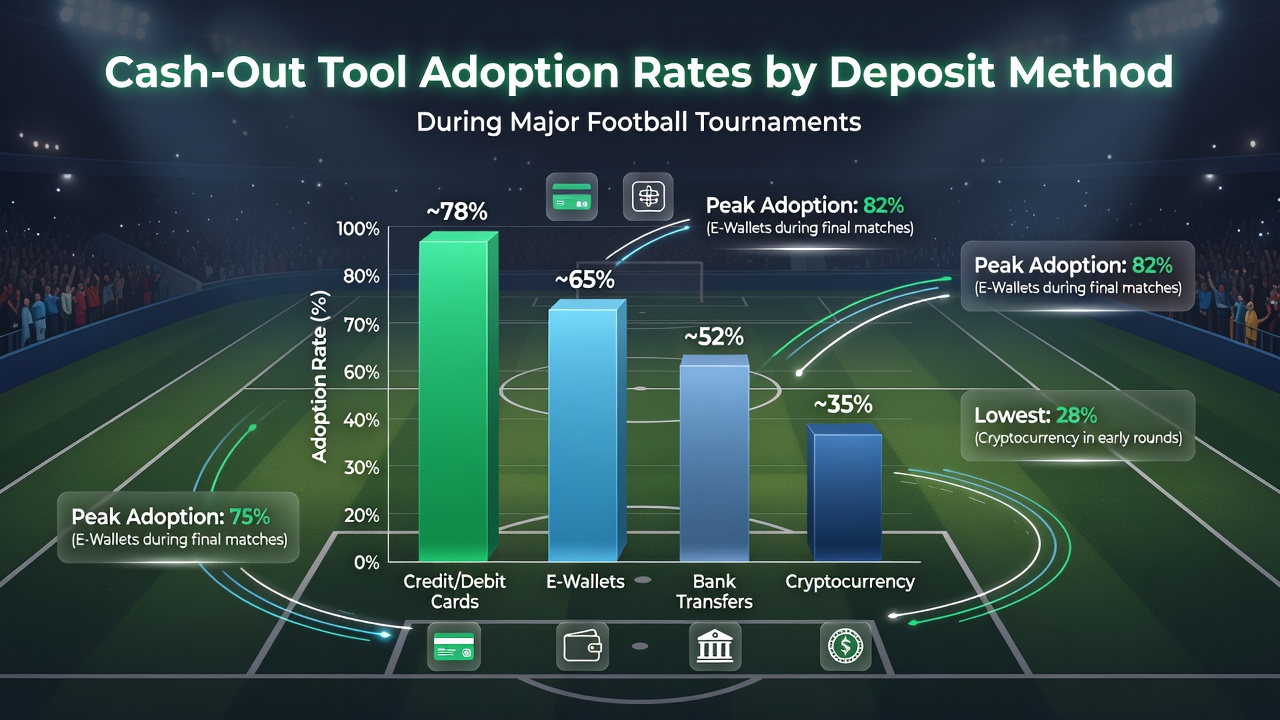
How Cash-Out Tool Adoption Rates Vary by Deposit Method on Football-Focused Platforms During Major Tournaments
Football-focused betting platforms track cash-out tool usage closely during major tournaments because these events generate concentrated activity spikes that reveal clear patterns in how bettors manage positions. Data collected across multiple platforms shows adoption rates differ noticeably depending on the deposit method chosen at account funding time, with variations becoming more pronounced when tournaments like the FIFA World Cup or UEFA European Championship reach knockout stages.
Deposit Methods and Their Typical User Profiles
Platforms record several primary deposit categories that correlate with distinct cash-out behaviors during high-stakes periods. Credit and debit card deposits remain the most common entry point, while e-wallets such as Skrill and Neteller attract users who prioritize transaction speed. Bank transfers and emerging cryptocurrency options complete the main groups, each drawing different segments of the betting population. Researchers at the University of Sydney's Gambling Treatment and Research Centre have documented that card-funded accounts often maintain longer session durations during tournament weeks, whereas e-wallet users tend to execute more frequent adjustments to open positions.
Figures from teh 2024 European Championship period indicated card depositors activated the cash-out feature in roughly 34 percent of eligible football markets once matches entered the second half, compared with 41 percent for e-wallet funded accounts. Bank transfer users showed the lowest activation at 22 percent, though their average stake sizes ran higher than other groups. Cryptocurrency deposits, still a smaller share of total volume, produced activation rates near 38 percent according to aggregated platform telemetry released in mid-2025.
Tournament Timing and Behavioral Shifts
Major tournaments compress decision windows because matches occur in quick succession, prompting more bettors to reassess positions after early goals or red cards. Observers note that cash-out adoption climbs overall during these windows, yet the magnitude of increase tracks closely with how quickly funds can move in and out of an account. E-wallet users, who benefit from near-instant processing, demonstrate the sharpest rise in cash-out clicks when scorelines shift rapidly, while card users display steadier but less reactive patterns. August 2026 will see several platforms release updated datasets covering the 2026 FIFA World Cup in North America, allowing direct comparison of these trends against previous cycles.
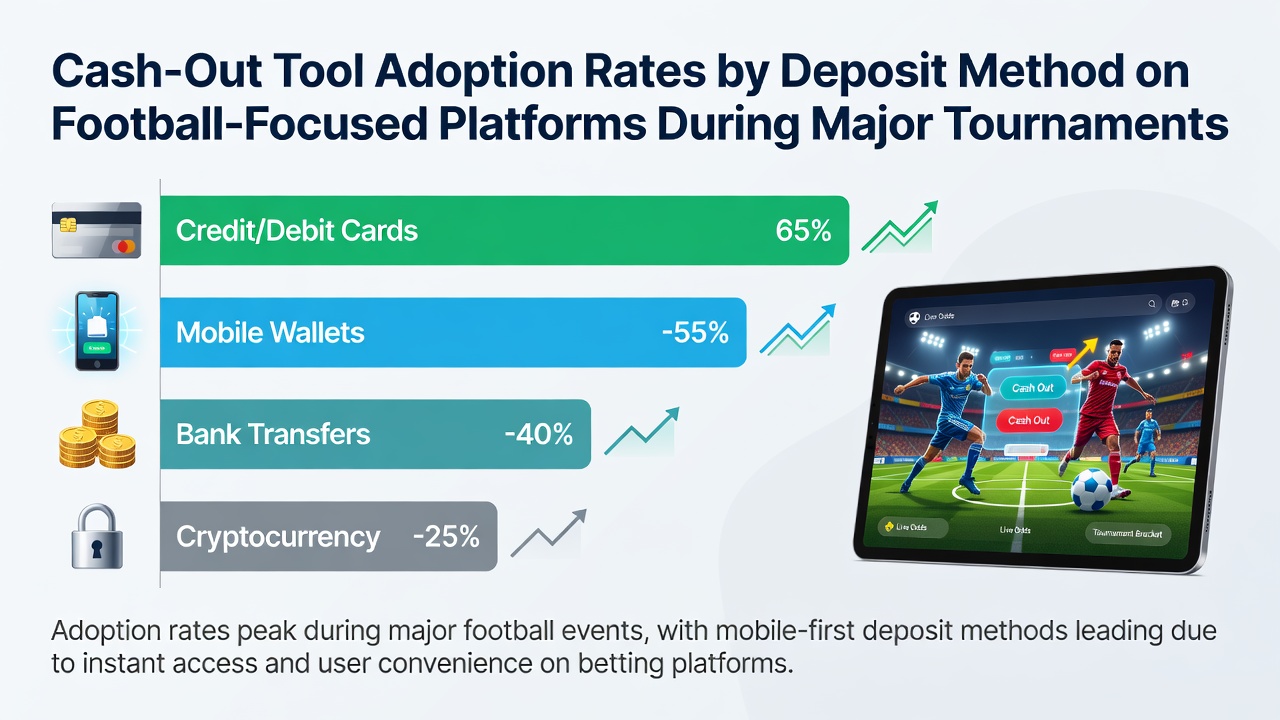
Platform operators segment their analytics by funding source because the differences affect risk management and promotional targeting. One study covering the 2022 World Cup found that accounts funded via bank transfer held positions to full-time completion more often than any other category, resulting in lower cash-out volumes even when live odds moved favorably. In contrast, cryptocurrency-funded accounts exhibited the highest sensitivity to in-play volatility, with adoption rates peaking during extra time across knockout fixtures.
Factors Driving the Observed Differences
Transaction friction plays a measurable role. Deposit methods that involve longer settlement times appear to encourage more conservative position management, reducing the likelihood of mid-match cash-outs. Faster methods align with higher engagement in live markets, where bettors can respond to unfolding events without waiting for funds to clear. Regulatory filings from the Alcohol and Gaming Commission of Ontario and reports issued by the Australian Communications and Media Authority both highlight that funding velocity correlates with the frequency of in-play adjustments across football products. Platform data further shows that users who deposit with multiple methods over time often migrate toward faster options once they begin using cash-out tools regularly.
Seasonal tournament calendars amplify these dynamics because the volume of concurrent matches increases the number of decision points per account. During the group stages of recent European Championships, card-funded accounts recorded cash-out rates approximately 12 percentage points lower than e-wallet accounts in the same markets. The gap narrowed slightly in later rounds but remained consistent across datasets compiled by several major operators.
Platform Responses and Data Collection Practices
Operators adjust interface elements and notification timing based on observed deposit-method patterns. Push alerts reminding users of cash-out availability appear more frequently for e-wallet segments during live matches, while bank-transfer users receive fewer prompts. These adjustments stem from internal analytics rather than external mandates, yet they produce measurable differences in activation rates. Industry reports compiled by the European Gaming and Betting Association indicate that platforms testing segmented notifications achieved up to 9 percent higher cash-out uptake within targeted funding groups without altering overall betting volumes.
Continued monitoring through 2026 will clarify whether cryptocurrency adoption accelerates further or stabilizes, particularly as more jurisdictions finalize rules around digital asset deposits. Current evidence suggests the relationship between deposit method and cash-out behavior persists across different tournament structures and geographic user bases.
Conclusion
Available platform data and regulatory filings establish that cash-out tool adoption on football-focused sites varies systematically according to deposit method, with e-wallet and cryptocurrency accounts showing higher activation during major tournaments than card or bank-transfer accounts. These patterns hold across multiple events and remain visible in both European and North American markets. As additional datasets from the 2026 World Cup become public, analysts will gain clearer longitudinal insight into how funding choices continue to shape in-play decision making.